Public records by social security number link a single numeric identifier to multiple federal and state data sources. The Social Security number is required for IRS wage matching on Forms W‑2 and 1099, for bank Know Your Customer checks, and for most credit‑card applications. When authorized, the number can expose filing status, employment history from the Social Security Earnings Record, and Medicare enrollment dating back to 1997. Law‑enforcement agencies and licensed background‑check firms may request curated excerpts under the Privacy Act, while the Social Security Administration offers verification pathways such as SSNVS, CBSV, and EDM for employers and contractors.
How Social Security Numbers Connect to Public Records
A Social Security number acts like a digital thread that ties together many parts of a person’s life in government and business systems. From the moment someone starts their first job, their SSN becomes part of tax forms, payroll records, and benefit programs. Over time, this number appears in court files, property deeds, marriage licenses, and even death notices. Because so many agencies use it as an identifier, one SSN can unlock a wide range of information—if access is allowed by law.
Federal rules limit who can see full SSN details. The Privacy Act of 1974 restricts disclosure without consent, but exceptions exist for law enforcement, health care, and certain background checks. State laws add another layer. Some states redact SSNs from online records, while others still publish them in older documents. This patchwork means what shows up in a search depends heavily on location and date of filing.
Types of Public Records Linked to Social Security Numbers
Several key categories of records may contain or be searchable by SSN. Vital records—like birth, death, marriage, and divorce certificates—often include the number when issued by state health departments. Court dockets, especially in civil or family cases, sometimes list SSNs in filings related to child support, probate, or bankruptcy. Property tax rolls and voter registration databases may also carry the number, though many states now remove it before making data public.
Federal systems hold additional layers. The Social Security Administration maintains earnings records that track wages reported by employers since 1951. Medicare enrollment data goes back to 1997. The National Crime Information Center (NCIC) includes SSNs in criminal history reports used by law enforcement. Bankruptcy filings on PACER, the federal court system, often require SSN disclosure for debtor identification.
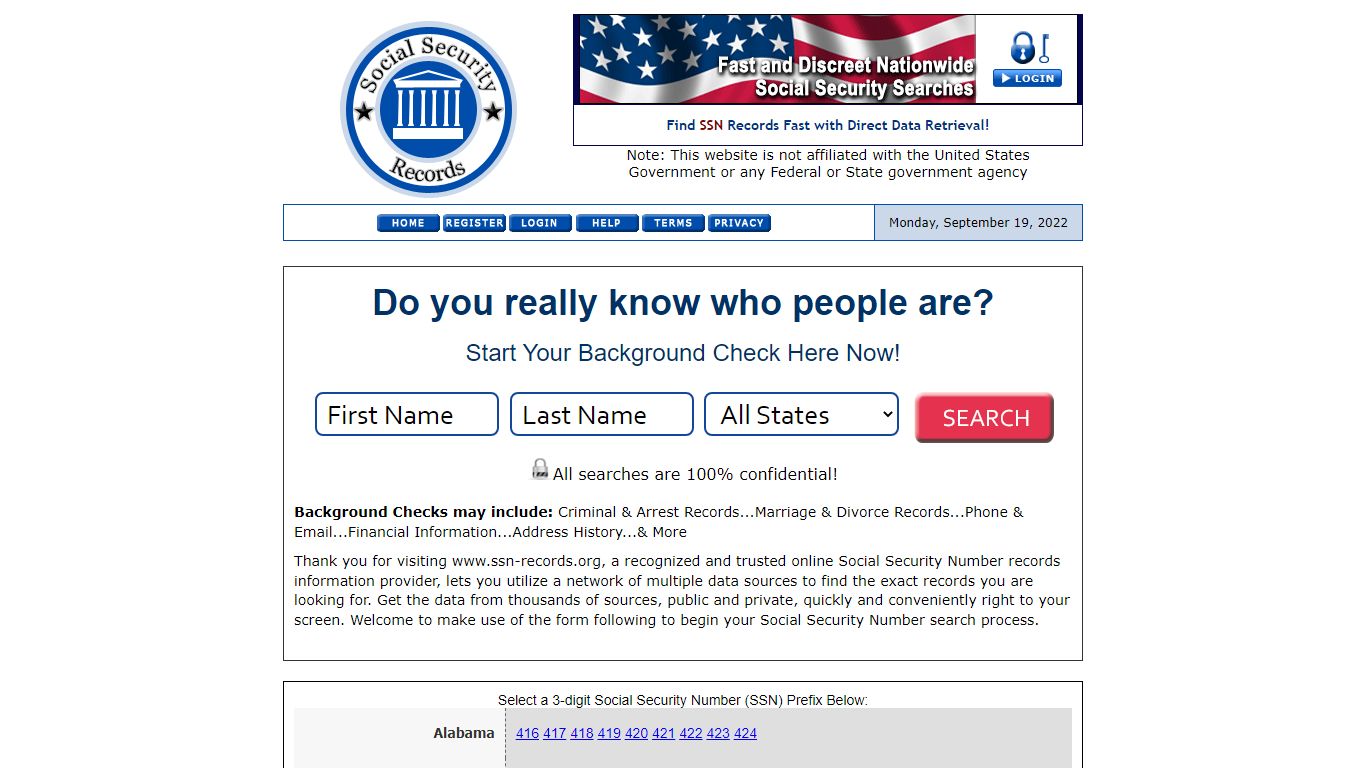
Commercial data brokers aggregate these sources. Sites like USATrace.com and ssn‑records.org pull from DMV files, county clerks, utility bills, and licensing boards to build profiles. Results typically show current address, phone number, employment history, legal judgments, and more—each tagged with a filing date for timeline accuracy.
State Laws Determine What’s Visible
Not all states treat SSN visibility the same way. California mandates redaction of SSNs from electronic court filings and restricts their use in property records. Florida faced a major breach in 2014 when driver’s license records with SSNs were exposed online, prompting new privacy safeguards. Texas allows SSNs in some professional license listings but blocks them in voter rolls.
In 2008, the Federal Trade Commission urged all agencies to stop using SSNs as primary identifiers due to identity theft risks. Since then, new forms and databases have phased out the number. However, legacy records from the 1990s and early 2000s still contain SSNs and remain searchable through specialized tools. This creates a gap: older data is more likely to expose the number, while newer records hide it.
Researchers and journalists rely on anonymized datasets from the SSA’s Open Data initiative, which publishes trends without revealing individual numbers. These include annual benefit payments, disability counts, and top earner summaries—all stripped of personal identifiers to protect privacy.
Official Verification Services from the Social Security Administration
The Social Security Administration provides three secure ways for authorized users to verify SSNs. The Social Security Number Verification Service (SSNVS) lets employers confirm that a worker’s name and number match SSA records—free and instant for registered businesses. Consent Based SSN Verification (CBSV) requires written permission from the individual before any check, limiting use to banks, insurers, and government agencies with legal authority.
Electronic Data Matching (EDM) helps federal contractors cross-check employee SSNs against the Master File to prevent payroll fraud. Every query is logged for audit purposes, ensuring accountability. All three services comply with the Privacy Act and never return full earnings histories—only confirmation of a match or mismatch.
These tools are not for public use. Individuals cannot run SSN checks on others through SSA channels. Only employers, financial institutions, and approved entities with legitimate needs can access verification systems.
How Commercial Sites Build SSN-Linked Profiles
Commercial people-search platforms use automated scrapers and data partnerships to compile records tied to an SSN. They start with public filings—county property assessors, motor vehicle departments, and court clerks—then layer in utility records, licensing boards, and federal databases. Each entry includes a source agency and timestamp, so users know how recent the info is.
For example, a search on ssn-records.org might return a homeowner’s mortgage registration from the county recorder, a utility bill address verified by the Public Utilities Commission, and a medical license from the National Provider Identifier registry. Phone numbers come from landline records linked to service accounts, not cell carriers, which are protected by stricter privacy laws.
These services do not hack or steal data. They collect what’s already public—or legally disclosed under exemptions—and organize it for easy access. However, accuracy varies. Outdated addresses, clerical errors, or mixed identities can lead to false matches. Users should always verify critical details before acting on results.
Using FOIA to Request Records That May Contain SSNs
The Freedom of Information Act gives anyone the right to ask federal agencies for records—including those that mention SSNs. When you submit a FOIA request to the Social Security Administration, staff search databases like the FOIA Electronic Reading Room for relevant files. If the material contains personal data, the SSA redacts SSNs, birth dates, and other sensitive fields before release.
Standard processing costs $0.02 per page, but fee waivers are available for academic research or public interest projects. Response times vary from weeks to months, depending on complexity. Note: FOIA does not guarantee access to private company records or state-level data—only federal agencies are covered.
This process is best for historical research, policy analysis, or verifying official actions—not for locating individuals or running background checks. For those purposes, commercial services or licensed investigators are more practical.
Common Misconceptions About SSNs in Public Records
Many people assume that because an SSN appears in one record, it’s freely available everywhere. That’s not true. Just because a number shows up in a 1995 property deed doesn’t mean it’s in today’s voter roll. Privacy reforms have removed SSNs from most new documents, but old ones remain searchable until manually updated or destroyed.
Another myth is that anyone can look up your SSN online. In reality, only specific entities with legal authority—like banks verifying loan applicants or employers confirming new hires—can access verified data. Public search sites show aggregated public records, not live SSA databases.
Lastly, some believe replacing your SSN erases past records. While you can get a new card if yours is compromised, existing filings with the old number stay in place. The SSA links both numbers to your identity, so historical data remains connected.
How to Protect Your SSN from Misuse
Limit who you share your SSN with. Only give it to employers, banks, government agencies, and healthcare providers when required. Never carry your card in your wallet or store the number in unencrypted emails or texts.
Monitor your credit report annually at AnnualCreditReport.com. Check for accounts opened in your name that you didn’t authorize. Consider placing a fraud alert or credit freeze with the三大 bureaus if you suspect exposure.
If you find your SSN in an unexpected public record, contact the issuing agency to request redaction. Most states have procedures for removing sensitive data from online files. For federal records, use the FOIA process to ask for corrections.
Real-Time Search Tools and What They Reveal
Modern search engines like USATrace.com allow instant lookups using just a name and the first three digits of an SSN (the area number). The system checks the National Change of Address database, Federal Employee Quarterly Publication, and Department of Education records to return a preview with mailing address, recent employer, and civil judgments.
Upgrading to a full report adds phone numbers and email addresses sourced from public directories and utility filings. Results appear within seconds, making these tools useful for reconnecting with lost contacts or verifying identities—but not for illegal surveillance or harassment.
Always use such services responsibly. Misusing someone’s SSN to stalk, defraud, or discriminate is a federal crime punishable by fines and imprisonment.
Historical Context: Why SSNs Became Embedded in Public Records
From the 1930s to the early 2000s, government forms routinely asked for SSNs as a way to track citizens across programs. Tax returns, driver’s licenses, school enrollments, and even library cards included the number. This made record-keeping easier but created massive privacy risks.
After high-profile breaches and rising identity theft, the FTC and Congress pushed for change. By 2008, federal policy discouraged SSN use in new records. States followed suit, passing laws to redact or remove the number from public view. Today, only legacy documents and specific legal filings still contain it.
This shift reflects growing awareness that convenience shouldn’t outweigh security. While SSNs remain essential for benefits and taxes, their role in everyday records has sharply declined.
Open Data Initiatives and Anonymized Research
Since 2009, the SSA has released over 200 public datasets through its Open Government Initiative. These cover topics like annual benefit payments, retiree demographics, and disability trends—all stripped of personal identifiers. Researchers use them to study economic patterns without accessing individual SSNs.
Examples include the “Top 100 Earners” list (quarterly, anonymized) and the Public Use Microdata Sample (PUMS), which models income distribution across populations. Data is available in CSV and JSON formats at data.ssa.gov, supporting academic, nonprofit, and policy work.
This approach balances transparency with privacy—showing system-wide trends while protecting individual identities.
Contact Information for Official Inquiries
For questions about your own SSN, replacement cards, or verification services, contact the Social Security Administration:
- Official website: https://www.ssa.gov
- Toll-free phone: (800) 772-1213
- TTY for hearing impaired: (800) 325-0778
- Hours: Monday–Friday, 7 a.m. to 7 p.m. local time
For in-person help, visit your local SSA office. Use the office locator tool on ssa.gov to find hours and directions. Bring a certified birth certificate or U.S. passport when requesting a replacement card.
Commercial services like USATrace.com and ssn-records.org operate independently. They do not represent the government and charge fees for detailed reports.
Frequently Asked Questions
Many people have similar concerns about how their Social Security number appears in public records, who can access it, and what rights they have to control its use. Below are detailed answers to the most common questions, based on current federal and state laws, SSA policies, and real-world practices. Each response focuses on clarity, accuracy, and actionable advice—without legal jargon or unnecessary complexity.
Can anyone look up my Social Security number using public records?
No, not directly. While some older public records may contain your SSN, you cannot simply type a name into a search engine and get someone’s full number. Most states now redact SSNs from new documents, and federal law restricts access to verified entities like employers, banks, and government agencies. Commercial sites show aggregated public data—not live SSA records—and often require partial info (like a name and area number) to return results. Even then, they cannot reveal your full SSN unless it’s already exposed in a public filing. If you’re concerned about exposure, check your state’s privacy office for redaction procedures.
Is it legal to search for someone using their Social Security number?
It depends on your purpose and method. Using a legitimate commercial service to reconnect with a lost contact or verify an identity for lawful reasons (like employment screening with consent) is generally allowed. However, using an SSN to stalk, harass, commit fraud, or discriminate is illegal under federal and state laws. Licensed background checkers must follow FCRA rules, including obtaining permission. Unauthorized access to government systems or hacking into databases carries severe penalties. Always ensure your intent aligns with legal standards before conducting any search.
What should I do if my SSN appears in an unexpected public record?
Contact the agency that published the record immediately. Most states have forms or hotlines to request redaction of sensitive data from online files. For example, California’s courts allow individuals to ask for SSN removal from electronic dockets. If the record is federal, submit a FOIA request to the relevant department asking for correction or deletion. Keep copies of all correspondence. If identity theft is suspected, place a fraud alert with Equifax, Experian, and TransUnion, and consider a credit freeze. Report incidents to the FTC at IdentityTheft.gov.
How accurate are commercial SSN search results?
Results vary widely. While reputable sites cross-reference multiple sources and timestamp each entry, errors happen—especially with common names or outdated addresses. Mixed identities, clerical mistakes, or delayed updates can lead to false matches. Never rely solely on these reports for major decisions like hiring or lending. Always verify critical details through official channels. The SSA’s verification services (SSNVS, CBSV) offer higher accuracy but are only available to authorized users, not the general public.
Can I remove my SSN from all public records permanently?
Not completely. You can request redaction from active online databases, but historical records—like old property deeds or court filings—may remain in archives or third-party collections. Replacing your SSN with a new one (only allowed in cases of proven misuse) links both numbers to your identity in SSA systems, so past records stay connected. The best protection is proactive: limit sharing, monitor credit, and act quickly if exposure occurs. Over time, as legacy records age out or get digitized with redactions, visibility will naturally decrease.
Are Social Security numbers still used as primary identifiers in new government forms?
Rarely. Since the FTC’s 2008 directive, federal and most state agencies have phased out SSNs as default identifiers. New tax forms, driver’s licenses, and school records typically use alternative numbers or omit the field entirely. Exceptions exist for programs where SSN is legally required—like IRS reporting or Medicare enrollment. This shift reduces long-term risk, but millions of older records still contain SSNs and remain searchable until updated or destroyed.
What’s the difference between a free SSN lookup and a paid background check?
Free lookups usually return basic previews—like a current address or employer—based on partial input (name and area number). They draw from publicly indexed sources but lack depth. Paid reports include verified phone numbers, email addresses, criminal history, bankruptcy filings, and detailed timelines, sourced from deeper databases and cross-checked for accuracy. However, even paid services cannot access non-public SSA data. For legally compliant employment or tenant screenings, use FCRA-certified providers who follow strict consent and disclosure rules.